News
What defence taught me about delivery — and where even the best fall short.
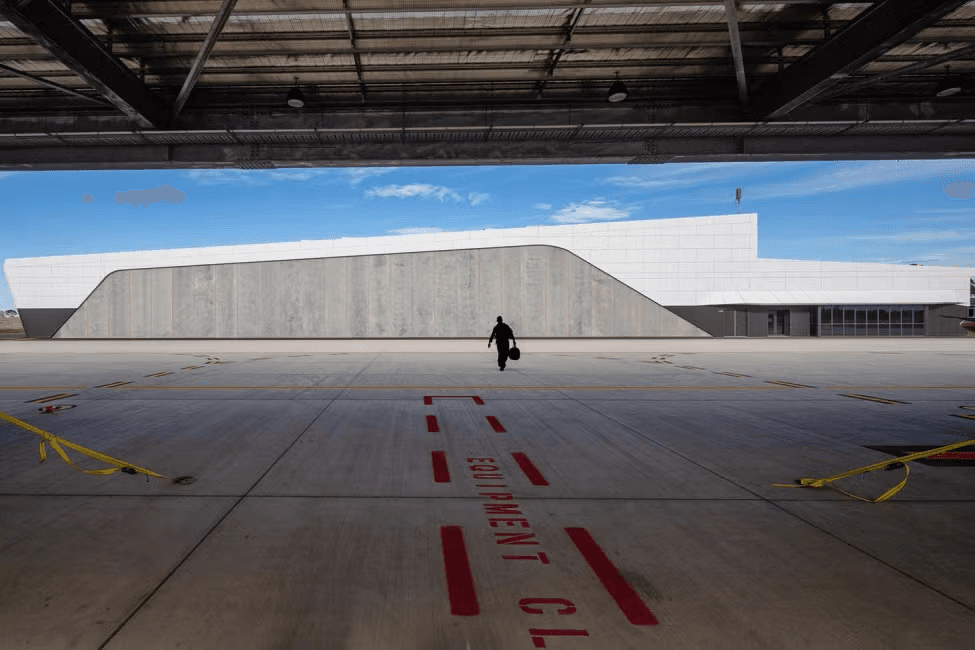
Defence infrastructure is as close to a controlled delivery environment as the construction industry gets. The procurement disciplines are rigorous. The documentation requirements are comprehensive. The standards are non-negotiable.
If you want to understand what serious project delivery looks like, spend time in it.
If you want to understand where even serious delivery falls short — spend more time in it.
The same environment that shows you what good looks like also shows you exactly where the fat is.
What defence gets right
The procurement process forces a discipline that most commercial construction environments never develop. Risk mitigation isn't treated as a contingency line item — it's a design input. The question isn't how to price the risk and move on. The question is how to reduce it through better decisions earlier.
Investing capital to achieve a better operational outcome isn't viewed with suspicion. It's the expectation. Front-end investment — in design quality, in scope definition, in understanding what you're actually building and why — is treated as the work, not as overhead sitting above it.
That changes the conversation at the table. It changes who needs to be there, what they're accountable for, and how early the hard questions get asked.
Commercial construction could learn a significant amount from that discipline alone. Most projects don't fail because the contractor couldn't build it. They fail because the decisions that determined what was being built, and why, and under what risk profile, were made without enough rigour and without enough challenge.
What defence still gets wrong
Here's the part that doesn't get said often enough.
Even inside the most rigorous delivery structures, waste is embedded. Not incidentally — structurally. It accumulates in places that have become normalised because the overall standard is high enough that nobody stops to question individual elements.
Documentation that duplicates without adding value. Approval chains that create the appearance of control without creating actual accountability. Procurement frameworks that price in risk that never materialises — and that cost is carried through every contract, every programme, every project in the portfolio.
The people close enough to see it often lack the standing to name it. Or the incentive. The system rewards compliance with the structure, not interrogation of it.
Embedded waste in a high-performing system is harder to see — and more expensive — than waste in a poorly performing one.
Where the opportunity sits
The gap between what defence demands at the front end and what most commercial clients invest there is where a significant amount of project value gets lost. That's the first opportunity — applying the discipline of defence procurement thinking to commercial and government capital programs that currently don't have it.
The second opportunity sits inside the waste. The people who can tell the difference between what adds value and what doesn't — who can look at a process, a document, an approval chain, and make an honest assessment of what it's actually doing — are the ones positioned to innovate. Not by dismantling the standard, but by understanding it well enough to know what's load-bearing and what isn't.
That's not a theoretical position. It's an observation from time spent on both sides of the line — inside delivery structures rigorous enough to show you what good looks like, and close enough to the work to see what's carried along for reasons that stopped being valid a long time ago.
bryr. works with owners, developers, and government clients who want that level of thinking applied to their projects. If that's a conversation worth having, we're here.
Brad Eathorne — Co-Founder & Director, bryr.